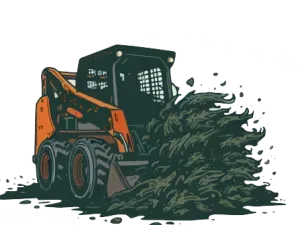
Grading and Leveling That Goes Beyond Pushing Dirt Around
Why Quick Fixes on Uneven Ground Don't Last
Spreading gravel over uneven ground or scraping soil without a grade plan leaves you with surfaces that erode, puddle, or settle unevenly within a season. Proper grading and leveling means reshaping contours so water flows where it should, compacted areas support weight, and finish elevations match the intended use. Without it, driveways develop ruts, homesites collect runoff, and cleared acreage stays too rough for consistent mowing or planting.
Handy Land Worx approaches grading as a step that builds on excavation and land clearing. Once trees are removed and soil is excavated to rough elevations, grading refines the surface to create predictable drainage and stable transitions between different areas. On properties with the varied terrain common across Middle Tennessee, experienced equipment operation determines whether finished ground sheds water or holds it, whether gravel stays in place or migrates downhill, and whether future improvements sit level or tilt.
How Experienced Grading Creates Functional Surfaces
Grading isn't just about making ground look flat—it's about creating slopes that manage water and elevations that support specific uses. For homesites, grading establishes pad height relative to access roads and ensures runoff flows away from building footprints. For driveways, it creates crown and cross-slope so rain doesn't pool in wheel tracks. On cleared acreage, it smooths high spots and fills depressions so equipment can cross without bottoming out or bouncing.
The work connects directly to land clearing because stumps and root masses need removal before finish grading achieves consistent elevations. It connects to excavation because rough cuts define approximate grades that finish passes refine. Insured service and construction experience matter when grading transitions between properties, approaches septic drain fields, or shapes ground near wells and utility lines. You end up with surfaces that function as intended—driveways that drain, building pads that stay dry, and cleared land that's ready for the next phase.
If you're preparing property in Smithville that needs improved contours or smoother ground, request a free estimate to discuss grading and leveling tailored to your site's challenges.
What to Evaluate Before Grading Work Starts
Grading done without a clear plan often creates new problems instead of solving existing ones. Knowing what to look for helps you separate thoughtful work from cosmetic fixes:
- Whether the grade plan accounts for where water will flow after the surface is reshaped
- How finish elevations tie into existing roads, driveways, or adjacent properties
- Whether soil is compacted in layers or simply pushed into low spots where it will settle
- How grading coordinates with land clearing and excavation so work isn't duplicated
- Whether the operator adjusts blade angle and pass direction to match Smithville's terrain instead of forcing a single slope across varied ground
Experienced equipment operation reduces the risk of over-grading that removes topsoil or under-grading that leaves drainage problems unsolved. Insured service protects both parties when heavy machinery reshapes ground near structures, septic systems, or property lines. Contact us to request a free estimate for grading and leveling in Smithville and create surfaces that support your property's intended use.