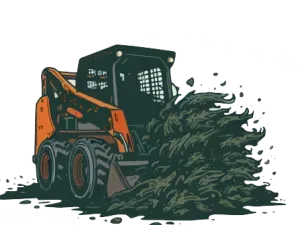
Transforming Overgrown Acreage into Accessible Ground
Visible Results from Dense Brush to Manageable Property
If you need forestry mulching around Cookeville, the outcome is immediate—dense thickets of saplings and undergrowth disappear, leaving a uniform layer of shredded material that settles into the soil. Property that once required a machete to walk through opens into defined trails, visible boundaries, and ground you can actually use. The transformation happens in hours, not weeks, as specialized equipment reduces years of growth to stable mulch cover.
Instead of hauling debris or fighting burn restrictions, mulching leaves organic material in place. That ground cover suppresses regrowth, reduces erosion on sloped sections common throughout Putnam County, and breaks down into soil improvement over the following seasons. Trails stay passable, property lines stay visible, and neglected sections become accessible without the bare-soil erosion problems that follow traditional clearing.
How Mulching Reduces Vegetation While Improving Access
Forestry mulching works by grinding vegetation in place rather than cutting and removing it. A rotating drum with carbide teeth processes saplings, brush, and small trees into mulch, eliminating the piles, haul time, and disposal costs of conventional clearing. The method suits wooded acreage where you want access without complete deforestation, boundary lines that need definition without fence-to-fence clearing, and overgrown areas where regrowth control matters as much as initial removal.
Handy Land Worx brings construction experience and insured operation to wooded properties around Middle Tennessee. Equipment selection matters—machines too light stall in hardwood saplings, while oversized units compact soil and damage root systems you want to keep. After mulching, you see clear paths to property corners, defined edges along tree lines, and access routes that stay navigable through wet seasons when unmaintained trails turn to mud.
For forestry mulching that opens access while controlling regrowth around Cookeville, request a free estimate to review your property conditions and clearing priorities.
Clearing Steps for Wooded and Overgrown Sections
Effective mulching follows a sequence that balances speed with site protection, addressing the thickest growth first and finishing with detail work along edges and obstacles.
- Initial assessment identifies trees to preserve, underground utilities, and terrain features that affect equipment movement across the property
- Primary passes target the densest saplings and brush, reducing standing vegetation to processed mulch in systematic lanes
- Edge work defines boundaries, clears fence lines, and opens sight lines along roads or between wooded sections and open ground
- Trail cutting establishes access routes to rear acreage, connecting property sections that were previously isolated by impassable growth
- Final grading smooths mulch distribution, addresses drainage concerns common around Cookeville's rolling terrain, and ensures even coverage that resists erosion
The process turns difficult overgrowth into more manageable ground without creating the bare-soil problems that follow burn piles or stump removal. Contact Handy Land Worx for a free estimate on reducing vegetation and improving usability across your wooded property.