Ground Leveling vs. Grading in Whitleyville: What Your Property Needs and How the Work Gets Done
Levelling and grading sound interchangeable, but they solve different problems — and on rural Jackson County lots, mixing them up leads to muddy pads, flooded driveways, and costly rework. Leveling flattens uneven ground; grading shapes it so water moves away from structures. Most Whitleyville rural jobs need both, because a perfectly flat pad sitting in a low spot will still pond water after every rain.
What Is the Difference Between Ground Leveling and Grading?
Leveling creates a flat, even surface by cutting high spots and filling low ones. Grading shapes the surface at a deliberate slope so water drains to a safe destination.
Think of levelling as removing the bumps and ruts from a pasture or yard so the ground sits consistently flat. A skid steer with a blade attachment makes multiple passes, shaving high areas and redistributing material into low ones until the surface is smooth and uniform.
Grading goes one step further — it builds a calculated slope into that surface. The standard minimum for drainage around a building pad or mobile home site is a 2% grade, which works out to roughly 2 inches of drop for every 10 feet of distance. That slope keeps water moving away from the structure instead of pooling against it, which protects foundations, piers, and access roads alike.
Do You Need Leveling, Grading, or Both?
Most rural Whitleyville property owners need both: a leveled surface for the pad or yard area, and grading around the perimeter so drainage flows away cleanly.
If your goal is simply smoothing a bumpy pasture or fixing ruts in a yard, levelling alone may be enough. But if you are setting a building pad, mobile home site, garage slab, or any structure with a foundation, grading the surrounding ground is not optional — it is what keeps the finished pad dry season after season.
Driveways are a common case where both apply at once. The surface needs to be levelled so it is drivable, but it also needs a slight crown — a gentle peak running down the center — so rainwater sheds to the sides rather than cutting ruts down the middle. Red clay subsoil, common in Jackson County, sheds water poorly once compacted, making this crown especially important.
Does Clearing Come First?
Yes — trees, brush, and stumps must be removed before any levelling or grading work begins, because buried organic material causes the ground to settle and void over time.
On wooded or overgrown lots, land clearing is the first step. Stumps left in place under a graded pad will rot and collapse, creating low spots and instability that undo all the grading work above them. Brush and debris must also be cleared so equipment can move freely and the operator can see the actual ground surface.
Dense overgrowth on a rural lot can sometimes be handled with forestry mulching, which grinds vegetation into a layer of organic material that stays on-site. Lighter brush may only need a pass before grading starts. Either way, the lot needs to be clear before a blade ever touches the soil.
How the Work Gets Done: Step by Step
A thorough site walk comes first, then clearing if needed, followed by rough cut, levelling passes, drainage grading, and a finished grade inspection before the surface is ready for gravel, seed, or construction.
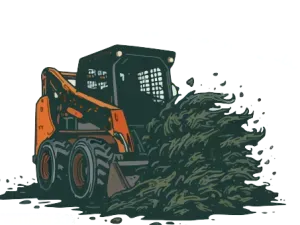
After clearing, the operator identifies high and low points across the lot and determines where water naturally wants to travel. Rocky ground — common on hillside lots in this part of Tennessee — may need break-up work before soil can be moved efficiently. A skid steer with a grading blade handles both the levelling pass and the slope work on most mid-size rural jobs, and its compact footprint lets it work close to fences, trees, and existing structures without causing damage.
The final grade inspection matters more than most property owners expect. The operator checks for any remaining low spots that could pond water, confirms the slope angle around the pad perimeter, and verifies that swales or drainage paths are open and moving water toward an appropriate outlet. A surface that looks smooth can still fail if water has nowhere to go. Learn more about skid steer work and how it fits both levelling and grading tasks on tight rural lots.
Is Fall the Right Time to Do This Work in Whitleyville?
Fall is typically the best window for ground levelling and grading in Middle Tennessee — the ground is firmer, the work settles over winter, and the finished grade is in place before spring rains arrive.
Spring in Jackson County brings extended wet periods that can make equipment access difficult and turn freshly graded soil into a muddy mess before it stabilizes. Getting the work done in late summer or fall means the disturbed soil has months to settle and compact before it faces its first heavy rain season. Gravel or seed applied over a fall-graded pad locks in the surface early, reducing erosion risk significantly.
If you are planning a mobile home placement, a cabin pad, or a new driveway, scheduling grading and levelling in the fall avoids both the summer heat that hardens clay soil and the spring mud that slows equipment and delays projects.
Knowing whether you need levelling, grading, or both — and in what order — means your pad stays dry, your driveway holds its shape, and your property is actually ready for what comes next.
Schedule an on-site assessment with Handy Land Worx to get a clear picture of what your property needs and a quote for the work.